$1,118 bought five registrations
Three weeks of advertising put the “Optimize Yourself” event in front of Sacramento-area business owners 66,649 times, pulled 745 people to the event page and produced five completed registrations at $223.56 each. A landing-page edit stopped the ads twice in the middle of the flight.
The short version. We spent $1,118 over three weeks on Google’s Demand Gen product. These are ads that run inside YouTube, Gmail and the Google Discover feed. The money bought 66,649 ad views and 745 clicks through to the event page, at $1.50 a click.
Five of those visitors completed the registration form. The event room holds roughly 40 to 60 people, so paid advertising filled about a tenth of it for $1,118.
Two things held the result back, and both are fixable. A mid-flight edit to the landing page tripped a Google policy rule and stopped the ads on six of the 22 days. And no creative in the campaign showed the event, the speakers or the subject matter.
What we spent, what it bought
Every figure below is pulled directly from the Google Ads account for the flight August 7 to 28, 2026. Spend, impressions and clicks are final. The registration count can still move, because the conversion carries a 30-day window.
What we ran
One campaign, one audience group, five ads. Demand Gen is Google’s social-style product: instead of waiting for someone to search, it places video and image ads inside YouTube, Gmail and Discover for people who match an audience definition.
Setup
| Where | Sacramento, Placer, El Dorado and Yolo counties |
| Who | Ages 25 to 54, household income in the top 20% of the area, all genders |
| Interests | Custom-built audiences around “Business Advice”, “Entrepreneur News” and “Videos About Entrepreneurship”, plus two saved audiences: “EO Prospect” and “EO Cold Audience - Custom Intent + Income” |
| Budget | $50 per day |
| Bidding | Maximize Conversions, which tells Google to buy as many registrations as the budget allows |
| Destination | Gamma event page, then the monday.com form, then a thank-you page |
Creative
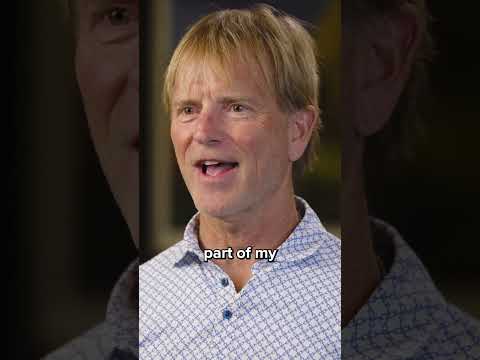
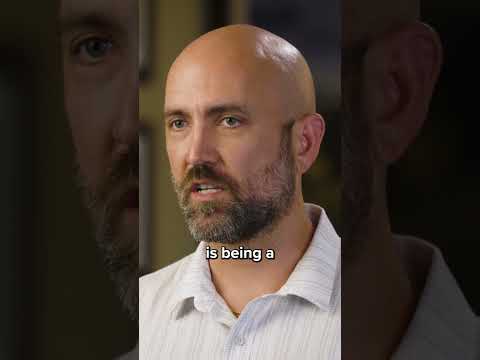
- Three video ads built on existing “Because of EO” member testimonials from Sheila Carroll, Mark Haney and Dave Reese, each in full and shortened cuts.
- Two image ads using chapter photography, in square, portrait and landscape crops.
- Five headlines rotated across every ad, mixing a qualifier (“For Sacramento Founders $1M+”) with a health-problem framing (“Your Health Has No Dashboard”).
- Five descriptions naming the speaker, the venue and the “free for qualified founders” offer.
What the ads looked like
Google assembles each ad at the moment it serves, so no single fixed layout exists. These are the actual pieces it drew from, and one reconstruction of how they came together on screen.
The three videos
Each is an existing “Because of EO” member testimonial. Click a thumbnail to watch it on EO Sacramento’s YouTube channel.
 ▶
▶
97 clicks · 2 registrations
 ▶
▶
81 clicks · 2 registrations
 ▶
▶
66 clicks · 0 registrations
The two image ads
Each image ad carried the same photo in three crops so Google could fit any placement. Image set A used a chapter sailing outing. Image set B used a chapter gala.
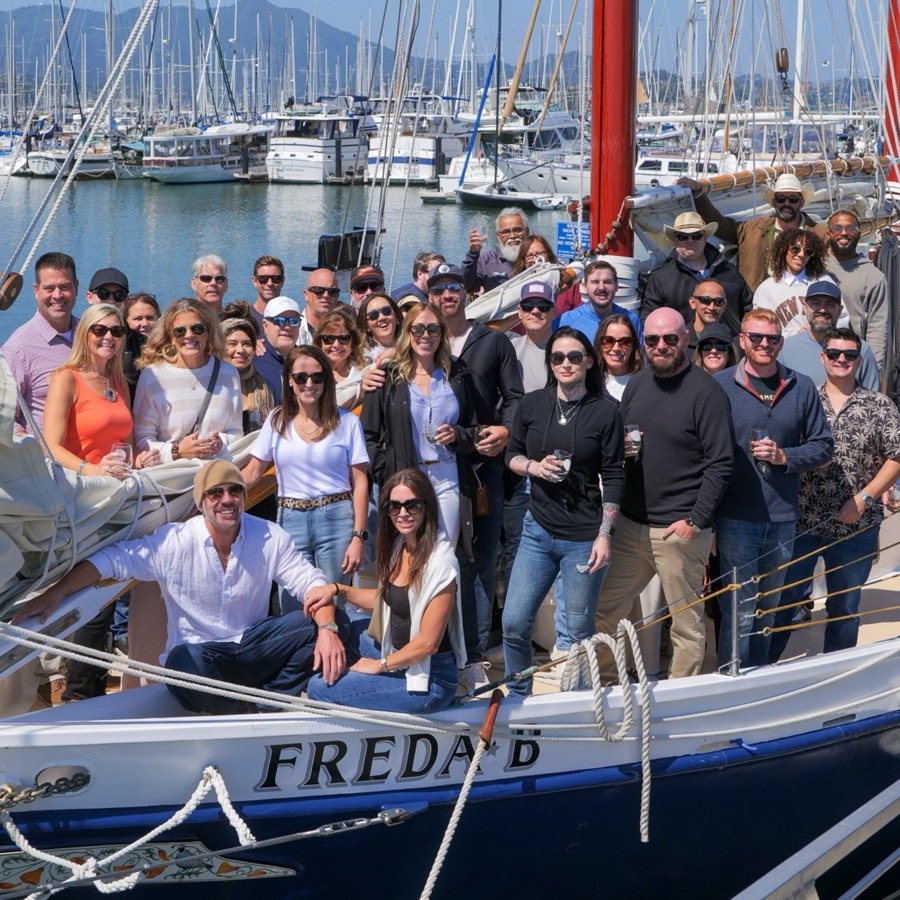
381 clicks · 0 registrations
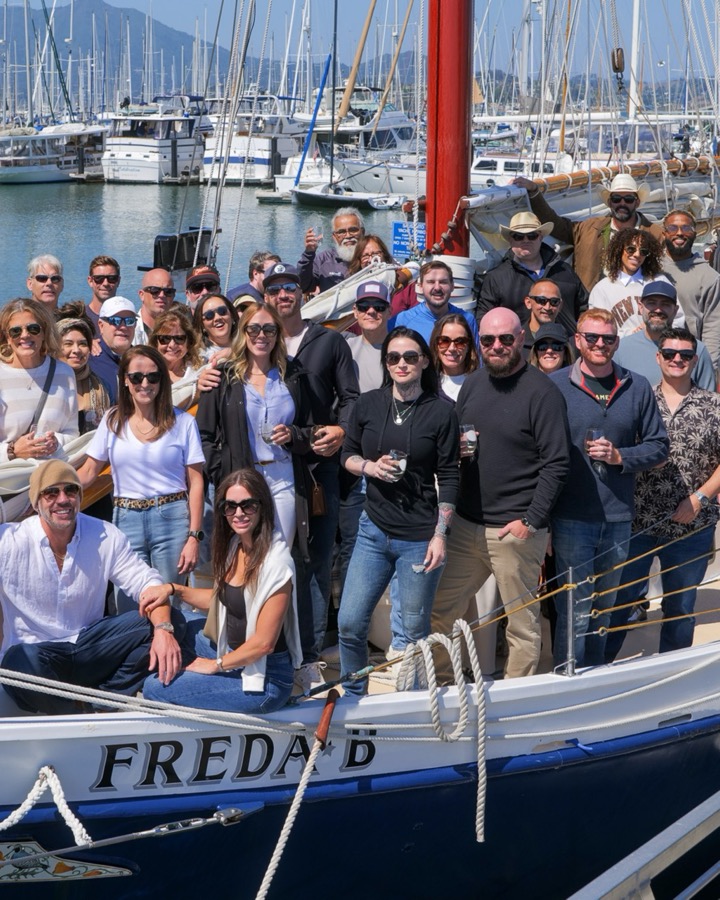
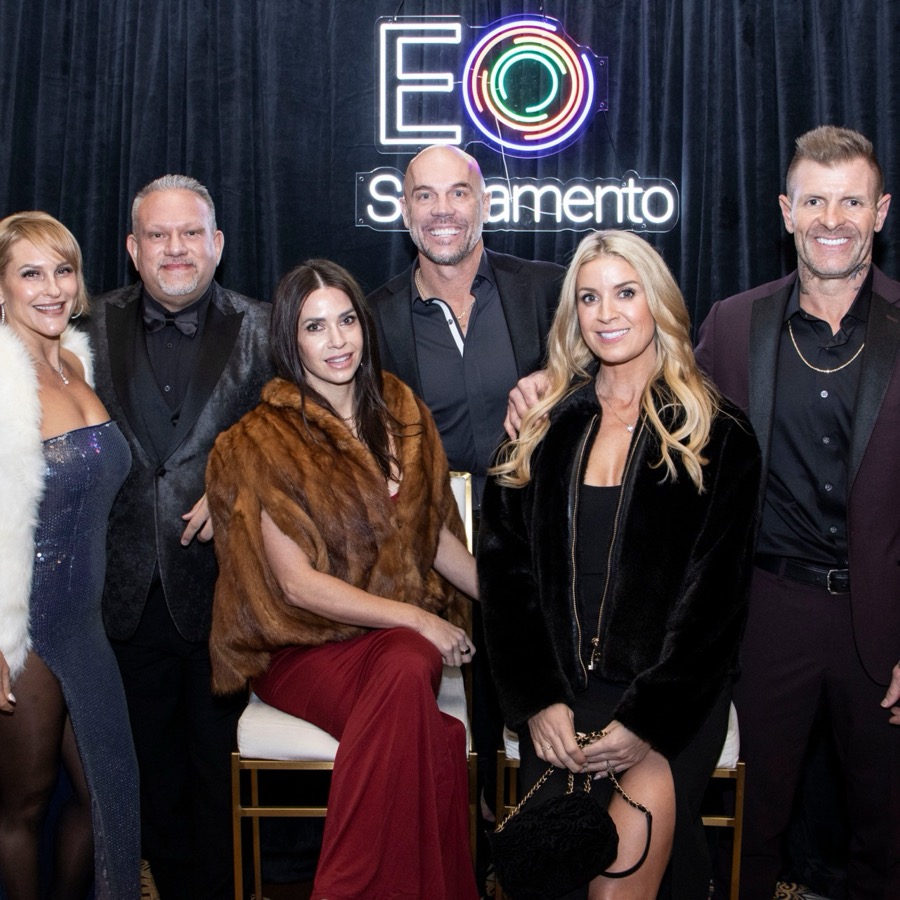
120 clicks · 1 registration
How a served ad came together
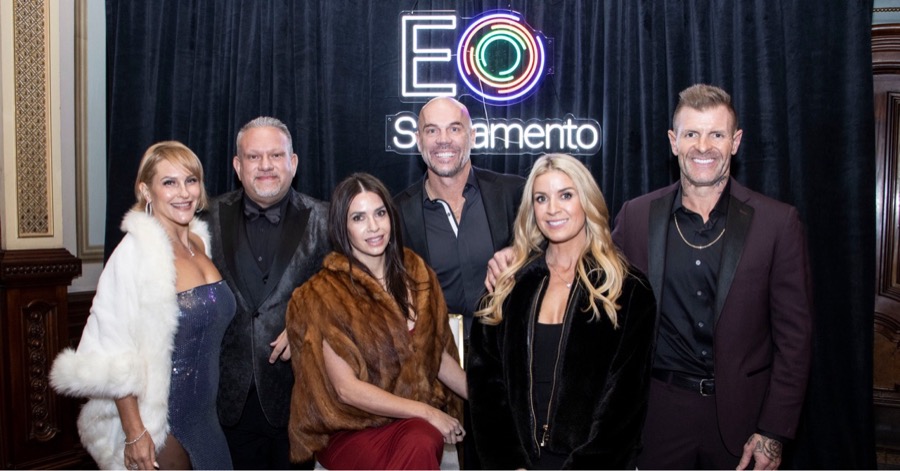
 EO Sacramento
This is a reconstruction, not a screenshot. Google does not store a picture of each ad it built. Every element shown here is a real asset from the campaign: the photograph, the logo, the business name, one of the five headlines and one of the five descriptions.
Google picked a different combination each time it served, from five headlines, five descriptions, five long headlines, two photographs in three crops each and three videos in full and short cuts. It also appends its own call-to-action button. That is why a single ad preview cannot represent the campaign, and why the tables below measure each element on its own.
How the money went out
Daily spend and daily impressions across the flight. Six days served nothing.
Which creative worked
Format first, then ad by ad, then the individual headlines.
Video versus image
| Format | Spend | Impressions | Cost per 1,000 | Clicks | Click rate | Registrations |
|---|---|---|---|---|---|---|
| Video (3 ads) | $725.06 | 22,101 | $32.81 | 244 | 1.10% | 4 |
| Image (2 ads) | $392.72 | 44,548 | $8.82 | 501 | 1.12% | 1 |
| Total | $1,117.78 | 66,649 | $16.77 | 745 | 1.12% | 5 |
Ad by ad
| Ad | Spend | Impressions | Clicks | Click rate | Registrations | Cost each |
|---|---|---|---|---|---|---|
| Sheila Carroll video | $307.30 | 9,490 | 97 | 1.02% | 2 | $153.65 |
| Mark Haney video | $263.13 | 7,192 | 81 | 1.13% | 2 | $131.57 |
| Image set A | $213.04 | 35,203 | 381 | 1.08% | 0 | n/a |
| Image set B | $179.68 | 9,345 | 120 | 1.28% | 1 | $179.68 |
| Dave Reese video | $154.63 | 5,419 | 66 | 1.22% | 0 | n/a |
Which message pulled
| Headline | Impressions | Clicks | Click rate | Registrations |
|---|---|---|---|---|
| For Sacramento Founders $1M+ | 45,343 | 455 | 1.00% | 1 |
| Free Founder Event, Sept 25 | 9,145 | 145 | 1.59% | 1 |
| Your Health Has No Dashboard | 5,154 | 65 | 1.26% | 3 |
| You Track Every KPI But One | 3,968 | 53 | 1.34% | 0 |
| A Founder Who Exited, On Health | 3,041 | 27 | 0.89% | 0 |
Who we actually reached
The targeting said ages 25 to 54 in the top income bracket. The delivery skewed older, heavily male and almost entirely to phones.
By age
By gender and device
| Segment | Spend | Clicks | Registrations |
|---|---|---|---|
| Men | $706.59 | 496 | 5 |
| Women | $391.81 | 238 | 0 |
| Unknown | $19.38 | 11 | 0 |
| Mobile phone | $991.02 | 680 | 4 |
| Desktop | $98.46 | 37 | 0 |
| Tablet | $28.29 | 28 | 1 |
What we learned
Four things that shaped this result.
-
A landing-page edit stopped the ads twiceProcess fix
Partway through the flight the event page was updated with more detail about the program. That new detail named specific peptides. Google treats named peptides as unapproved substances and restricts any ad pointing at a page that lists them, so it flagged the page and held the ads. Getting back on air took a policy review, and the same thing happened a second time.
The cost was six of the 22 days: August 16 and 17, then four straight days from August 21 to 24. The budget itself still went out the door, because Google made up the shortfall on the days it did run, spending $1,117.78 against a $1,100 plan. What we lost was six days of presence in front of the audience during the middle of a three-week flight.
Action: treat the landing page as part of the ad. Any edit during a live flight gets a policy check before it goes up, and discussion of peptides stays at topic level without naming compounds.
-
No creative showed the eventBiggest opportunity
Everything in the campaign was material that already existed. The three videos are “Because of EO” testimonials about chapter membership. The two image ads are photographs of members at a sailing outing and at a gala. Nothing pictured Tyler Smith or Dr. Bakri, the venue, or the subject of the afternoon.
The headline data points the same way. The two headlines that named the actual subject, “Your Health Has No Dashboard” and “You Track Every KPI But One”, out-clicked the generic qualifier that Google served in 68% of impressions. The message that described the event worked harder than the message that described the audience, and we had no pictures to match it.
-
We stopped four weeks before the eventPlan differently
The campaign ended on August 28, four weeks before the September 25 event, and its last four days were its strongest. August 27 alone delivered 20,630 impressions, nearly a third of the campaign total.
-
745 clicks at $1.50 eachKeep
The audience build of four counties, top-20% income and entrepreneurship interests delivered 745 clicks on a cold prospecting audience, at a 1.12% click rate. Keep it for the next flight, and keep the two testimonial videos that produced four of the five registrations.
Promoting the next prospecting event
What we would do differently, and what we would add. Some of this comes from this campaign. The rest is what a purpose-built event campaign normally carries and this one did not.
Build creative for the event, not around it
| Film the speakers before the flight | Ask each speaker for a short piece to camera: who they are, what they will cover, who should come. A founder who exited talking about his own health data is a stronger ad than a member testimonial about the chapter. |
| Cut a 15 to 30 second event promo | One piece of video whose only job is to sell this event: the date, the venue, the two speakers, the promise. Demand Gen rewards video, and video produced four of the five registrations here with none of it made for the event. |
| Make static creative from the speakers | Headshots, names and credentials as image ads. The Huberman Lab credit and the SkySlope exit are the kind of specifics that make a stranger stop. They appeared only in ad text, never in a picture. |
| Shoot the venue and the room | The Sofia in Midtown is a recognizable Sacramento room. A photo of the actual space tells a prospect what they are walking into. |
| Capture content at this event for the next one | Photograph and film the September 25 session. Next year’s campaign then opens with real footage of a full room instead of a boat. |
Change the flight and the structure
| Run to within a few days of the event | This campaign stopped 28 days out, on its four strongest days of delivery. Keep budget live through the final fortnight and weight it toward the end. |
| Start earlier at a lower daily budget | Give Google time to settle before the period that matters, rather than spending the learning phase in the only three weeks you have. |
| Split image and video into separate budgets | Images bought reach at $8.82 per thousand. Video produced the registrations at $32.81. Pooled together they compete for the same money. |
| Split the qualifier headline into its own ad | “For Sacramento Founders $1M+” took 68% of impressions and clicked below the campaign average. Separating it stops Google leaning on it. |
Catch the people we already paid for
| Retarget the 740 who did not register | 745 people reached the event page and five signed up. The rest are a known, warm, already-paid-for audience. A second, cheaper campaign aimed only at them is the fastest available win. |
| Add an email capture to the event page | Registration is a big ask on a phone. A lighter option, such as a reminder sign-up, keeps the people who are interested but not ready. |
| Give members a link to share | Paid advertising filled about a tenth of the room. Member networks reach the same kind of person at no media cost, and the creative built above works in their hands too. |
Protect the delivery
| Policy-check the landing page before every edit | The single largest controllable loss in this campaign. Any mid-flight change to the page gets reviewed against Google’s policies before it goes live. |
| Watch for zero-delivery days | Six dark days passed before anyone could act on them. A daily check on delivery catches a policy hold within a day. |
| Test the 55 to 64 age band | 45 to 54 was the best-clicking band by a clear margin. The band directly above it was excluded, so we have no read on it at all. Test it. |
How to read this
- Demand Gen
- Google's social-style advertising product. Ads appear inside YouTube, Gmail and the Google Discover feed, shown to people who match an audience definition rather than to people who searched for something.
- Impression
- One appearance of an ad on one person's screen. It is not a count of unique people. The same person seeing the ad three times counts as three impressions.
- Cost per thousand (CPM)
- What it costs to put the ad on screen a thousand times. We use it here to compare the price of reach between video and image.
- Click rate (CTR)
- Clicks divided by impressions. It shows how often the ad moved someone to stop what they were doing and open the event page.
- Registration
- One completed monday.com form, recorded when the person reached the thank-you page afterwards. Google credits it back to the day the person clicked the ad.
- Why the creative numbers do not add up neatly
- Google builds each ad on the fly from a pool of headlines, descriptions, videos and images. An impression is credited to every asset that appeared in it. So headline impressions total the campaign, but description and image totals do not, because not every layout shows every element.
- A word on sample size
- Five registrations is a very small number. It cannot show which headline, video or audience produced the result. Treat every creative conclusion in this report as something to test in the next flight.